


 Home
Navigating the Longevity Economy: The Role of 21-Channel PBM in Brain Health
 Suyzeko
 Oct 21,2026

Navigating the Longevity Economy: The Role of 21-Zone Full-Brain Phototherapy in Precision Anti-Aging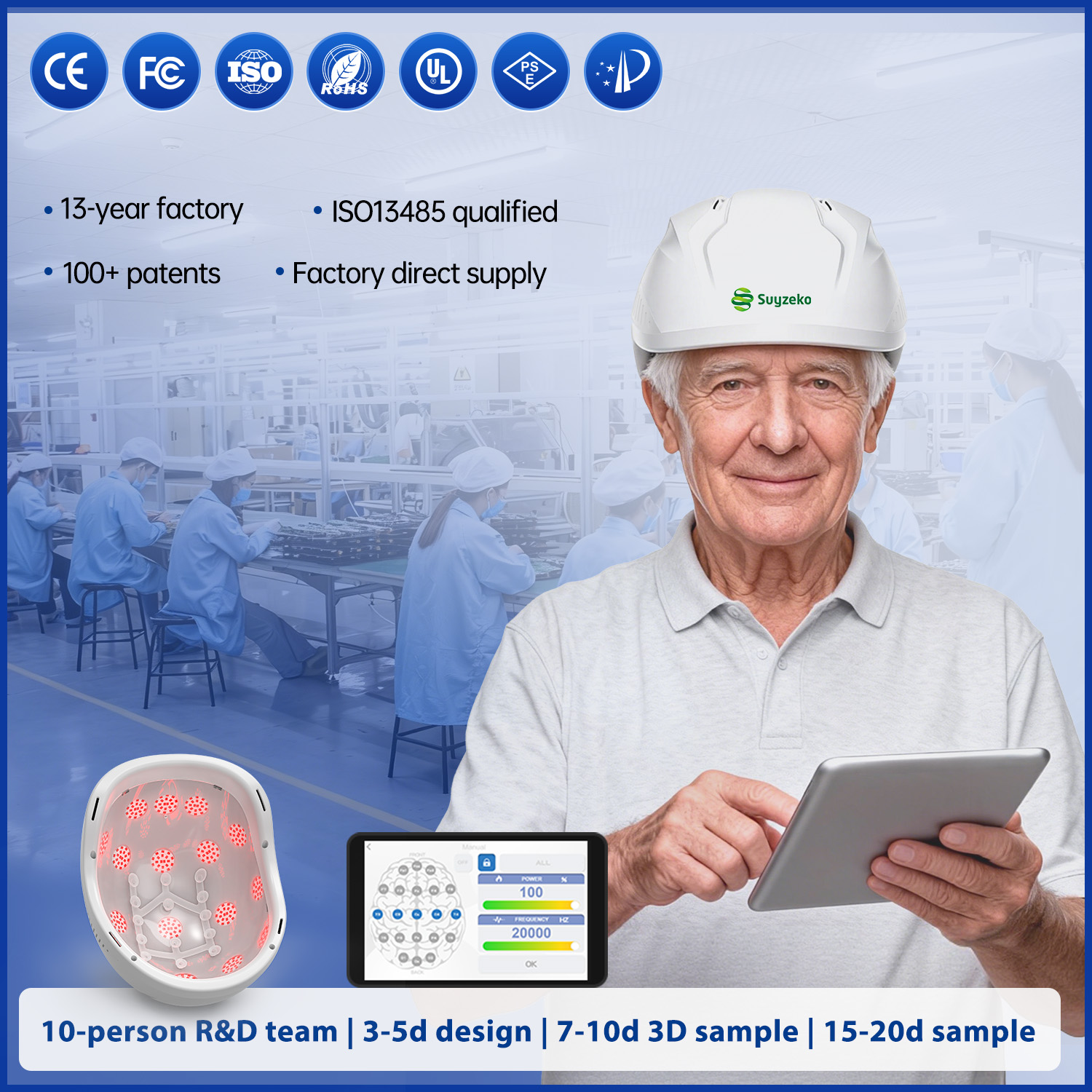
In the fields of health and longevity medicine, targeted cellular and neural regulation is rapidly becoming a focal point for both clinical practice and the rehabilitation industry. Unlike traditional systemic health management, modern specialists and clinics are shifting their focus toward preserving cognitive function, delaying neuronal aging, and optimizing cerebral blood flow.
Among various non-invasive neuromodulation techniques, transcranial Photobiomodulation (tPBM) has increasingly been integrated into advanced anti-aging centers, neurological rehabilitation clinics, and biohacking protocols due to its well-documented mechanisms acting on cellular mitochondria.
1.The Core Challenge of Brain Aging: Mitochondrial Dysfunction and Decreased Cerebral Blood Flow
As individuals age or face prolonged periods of high stress, the mitochondria within brain neurons experience a natural decline in activity. This leads to reduced adenosine triphosphate (ATP) synthesis and the accumulation of reactive oxygen species (ROS). This micro-level energy deficit often manifests as diminished concentration, cognitive slowing, memory decline, and poor sleep quality.
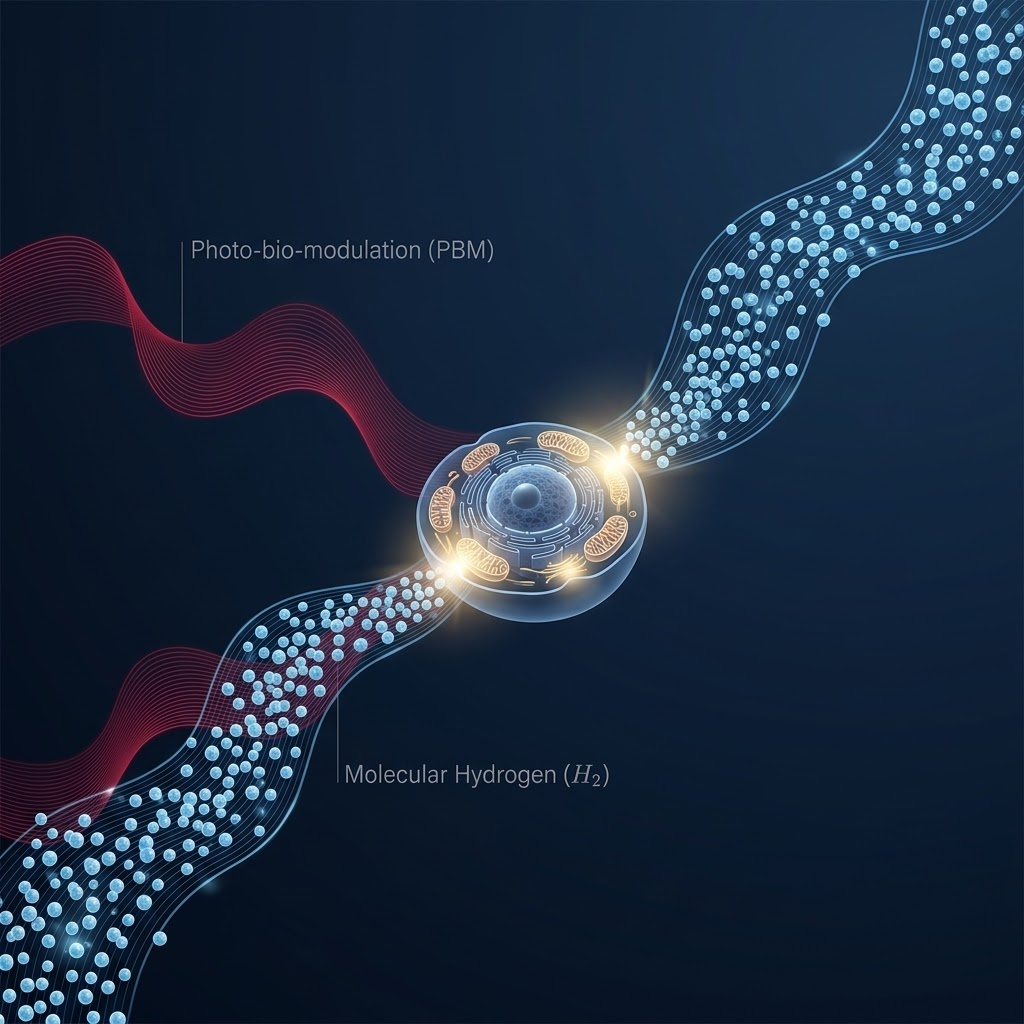
While traditional systemic anti-aging modalities—such as whole-body red light therapy beds or molecular hydrogen inhalation—can effectively improve systemic microcirculation and reduce oxidative stress, the human brain presents unique hurdles. Protected by the skull and characterized by highly differentiated functional networks, targeting specific neural circuits requires a more localized, precise, and penetrating photobiomodulatory approach.
2.The Scientific Mechanisms of Transcranial Photobiomodulation (tPBM)
The foundational scientific principle behind tPBM's effect on the brain lies in the absorption of near-infrared (NIR) light by Cytochrome c Oxidase (CCO) within neuronal mitochondria:
1.Photon Absorption and ATP Upregulation: The 810nm near-infrared wavelength can penetrate the scalp and skull to be absorbed by CCO, relieving the inhibition of the respiratory chain by nitric oxide (NO) and accelerating ATP production.
2.Enhanced Cerebral Blood Flow and Oxygenation: Photobiomodulation induces localized vasodilation, increasing regional cerebral blood flow (CBF) and oxyhemoglobin concentration.
3.Neuroplasticity and Gamma Entrainment: Pulsed light at specific frequencies (such as the 40Hz gamma band) can modulate brainwave rhythms, promoting the secretion of brain-derived neurotrophic factor (BDNF) to support synaptic plasticity and neuronal repair.
For practitioners looking to evaluate high-end hardware solutions implementing these precise specifications, you can explore the 【Suyzeko GY-L21 21-Channel PBM Helmet】.
3.Hardware Evolution: Why Precision Regulation Demands "21 Independent Channels"
Early brain phototherapy devices largely relied on whole-head, uniform-output designs. These lacked the ability to independently adjust parameters for distinct functional areas of the brain, such as the frontal lobe (responsible for executive function) or the temporal and parietal lobes (responsible for memory integration).
To address these clinical limitations, advanced systems like the Suyzeko 21-Channel Control PBM Helmet (GY-L21) have upgraded both hardware layout and software architecture:
1.420 High-Density LED Matrix & 36W Output: Equipped with 420 medical-grade LEDs delivering a robust 36W total output power, ensuring deep tissue penetration to the cerebral cortex and maximizing cellular absorption efficiency.
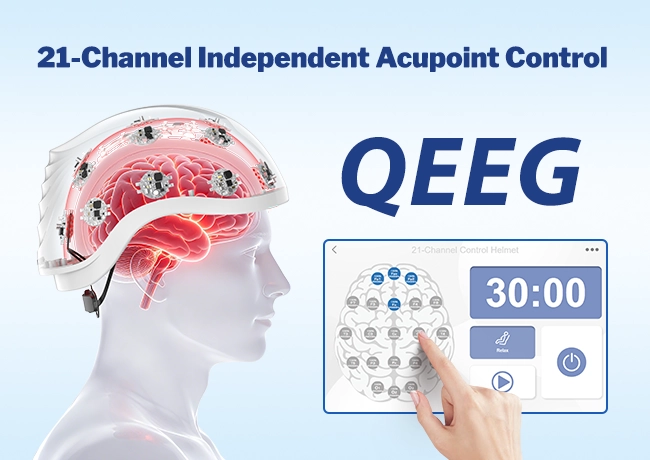
2.21 Independent Control Channels: Spanning the international standard 10-20 EEG electrode distribution, it allows operators to independently power on, turn off, or adjust the power for individual zones, achieving true region-specific targeting. To explore how zone control matches EEG diagnostics, see 【 Why the 21-Zone tPBM Helmet is the Perfect Match for QEEG】.
3.1–20,000Hz Wide-Frequency Pulse Modulation: Breaking past the limitations of fixed-frequency devices (such as traditional 10Hz or 40Hz-only models), it supports continuous frequency tuning from 1Hz to 20,000Hz, adapting to diverse clinical protocols ranging from slow-wave sleep induction to high-frequency neural activation.
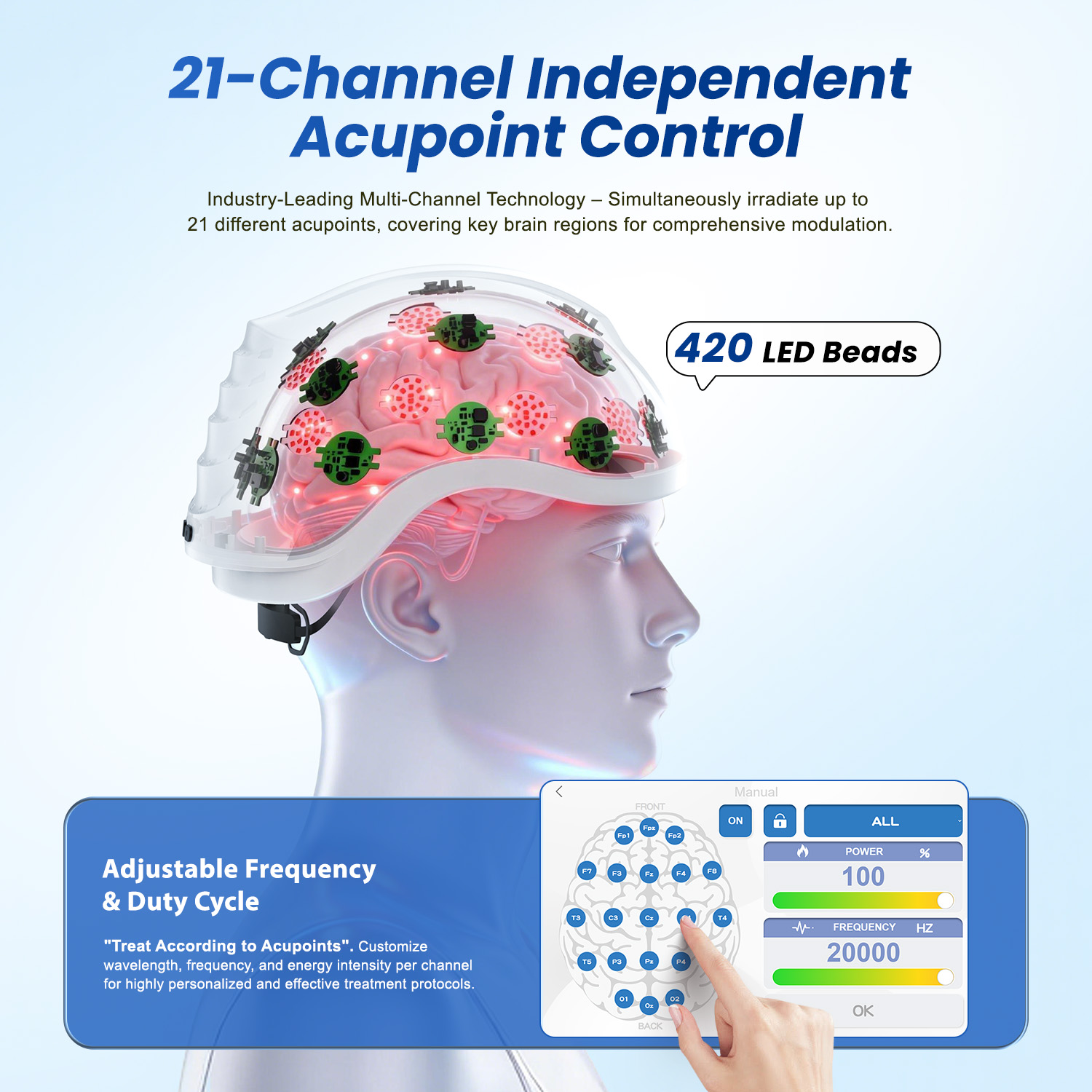
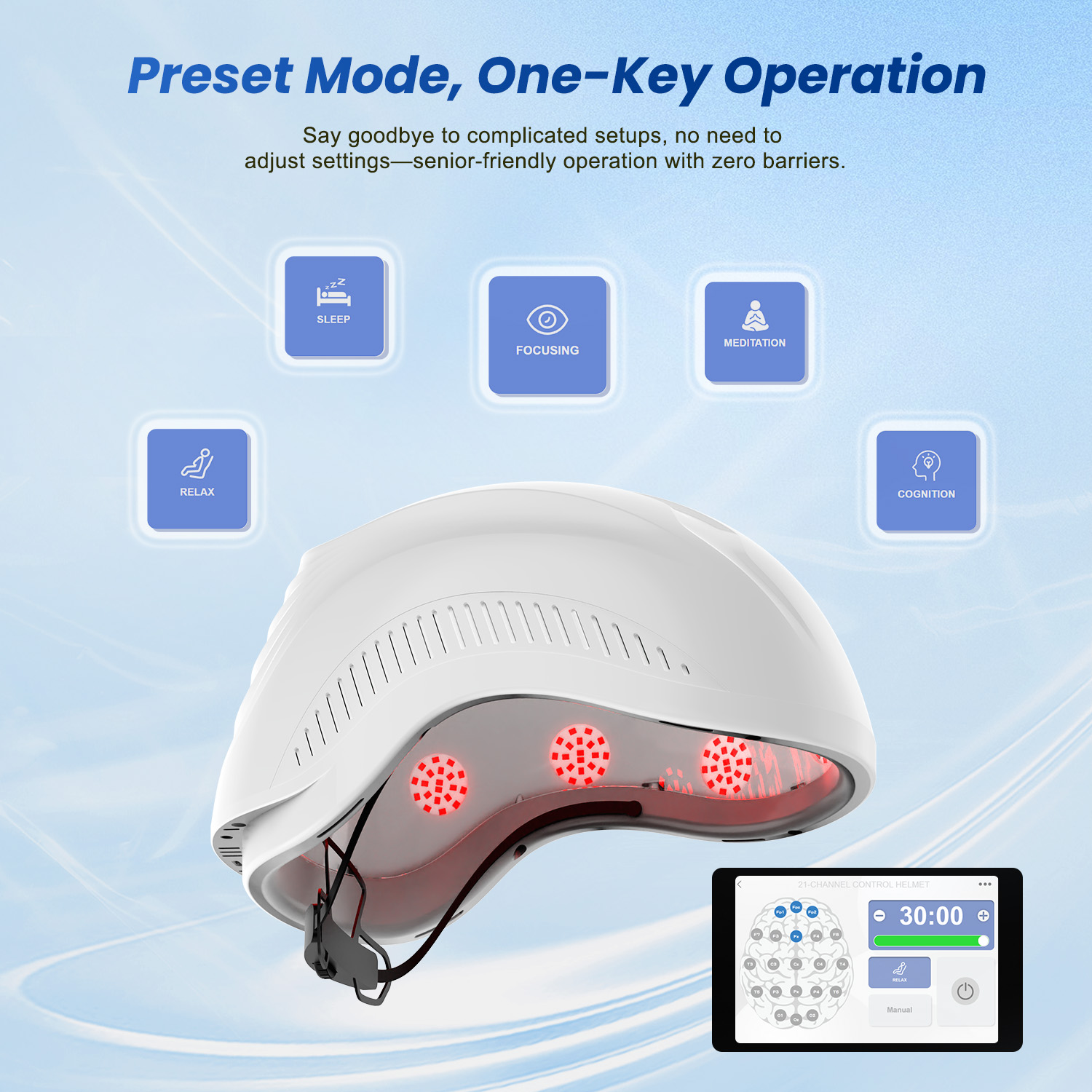
4.Smart Tablet APP Control & Multi-Step Protocols: Paired with an independent tablet controller, the system features built-in preset modes (Relax, Sleep, Focus, Meditation, Cognition) and allows clinicians to customize multi-step protocols combining varying frequencies across phases.
4. Clinical Applications and Workflow Integration for Modern Centers
For advanced institutions specializing in brain health evaluation and longevity medicine, a multi-zone tPBM helmet fits seamlessly into existing diagnostic and therapeutic workflows:

1.Synergy with QEEG / Brain Mapping: Clinics can utilize quantitative EEG diagnostics to identify specific regional irregularities in Alpha, Beta, or Theta wave distributions, subsequently programming matched parameters across designated channels on the GY-L21 tablet interface for a closed-loop "assess-intervene-retest" strategy.
2.Combining with Neurofeedback Training: Administering a 10–15 minute tPBM session prior to neurofeedback training helps elevate neuronal ATP reserves and blood oxygen supply, allowing subjects to enter training states more efficiently and improving overall neuroregulation outcomes.
3.Robust Commercial Reliability: Built under rigorous quality management standards such as 【Shenzhen Suyzeko proudly obtains ISO 13485 certification】, professional-grade equipment ensures dependable, continuous operation suited for high-throughput clinical environments. For insights on long-term hardware reliability in global markets, read 【Shenzhen Suyzeko Demonstrates Continuous Reliability in Global Markets】.
5. Conclusion
As longevity medicine transitions from passive systemic wellness toward precision neurological intervention, photobiomodulation devices equipped with multi-zone control and multi-parameter programming are becoming indispensable tools in modern brain health protocols.
If you would like to review the complete clinical parameter whitepaper for the GY-L21 helmet, request sample testing, or discuss institutional partnership opportunities, 【Contact Suyzeko Technical & Sales Team Today】 to connect with our specialists.
 Why Does an 830 nm LED Read 838 nm After 30 Minutes? Understanding Wavelength Thermal Drift in Red Light Therapy Panels