


 Home
Hydrogen and Red Light Therapy: How Dual-Targeting Mitochondrial Health Redefines Anti-Aging Protocols
 Suyzeko
 Oct 17,2026

Hydrogen and Red Light Therapy: How Dual-Targeting Mitochondrial Health Redefines Anti-Aging Protocols
As the global health industry transitions from "reactive healthcare" to "proactive longevity medicine," biohackers, high-end anti-aging clinics, and longevity centers are constantly seeking synergistic interventions to slow down aging at the cellular level.
Among various physical wellness technologies, molecular hydrogen inhalation and photobiomodulation (PBM / red light therapy) have emerged as a golden combination in longevity science. Why do these seemingly distinct physical therapies create such a powerful synergy? How do they dual-target mitochondrial health to redefine modern anti-aging protocols?
This article provides an in-depth analysis from the perspectives of scientific mechanisms, cell biology, and clinical-grade equipment applications.
1.The Essence of Aging: Mitochondrial Dysfunction and Energy Crisis
To understand the core logic of anti-aging, we must first examine the "power plants" of human cells—the mitochondria.
As we age or face prolonged chronic oxidative stress, mitochondrial dysfunction occurs. This not only causes a sharp drop in ATP (adenosine triphosphate) energy production but also leads to massive leaks of reactive oxygen species (ROS, or free radicals) within the electron transport chain. These excessive free radicals further damage mitochondrial DNA, cell membranes, and proteins, forming a vicious cycle that accelerates systemic aging.
The core consensus of modern longevity medicine is that delaying aging and preserving healthspan is not about surface cosmetic fixes, but about restoring mitochondrial vitality and maintaining cellular redox balance.
Against this backdrop, molecular hydrogen and photobiomodulation (PBM) stand out as non-invasive physical interventions.
2.Mechanism 1: Molecular Hydrogen—The "Antioxidant Shield" for Selective Oxidative Stress Mitigation
As an exceptionally small, biologically active molecule, molecular hydrogen (H2) is capable of penetrating cell membranes and the blood-brain barrier. It precisely neutralizes highly toxic hydroxyl radicals (-OH) within the body while simultaneously activating the body’s endogenous antioxidant defense systems.
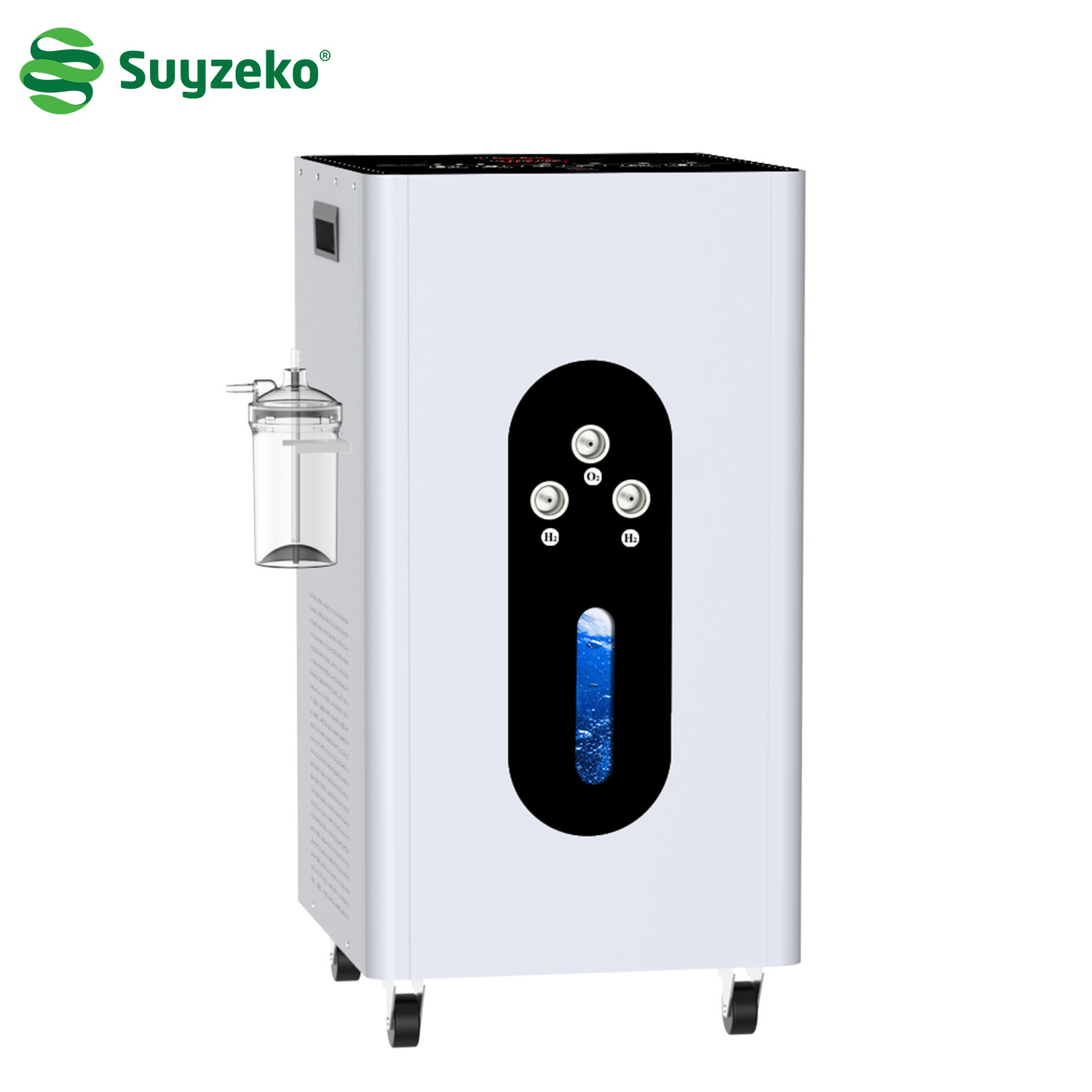
To achieve optimal therapeutic or wellness outcomes in both clinical and home settings, high-flow devices are widely preferred. For instance, our [Suyzeko 6000–3600 mL/min hydrogen generator series] utilizes U.S.-made DuPont™ Nafion™ proton exchange membranes and core SPE/PEM technology to deliver a stable output of 99.99% pure, ozone-free molecular hydrogen. (For a deeper dive into the underlying hydrogen-production principles, please refer to: [Demystifying Hydrogen Tech: What is the Relationship Between SPE and PEM?])
3.Mechanism 2: Photobiomodulation (PBM)—a "photonic key" that directly awakens mitochondrial energy
If molecular hydrogen acts to "clear out waste" within cells, then red and near-infrared light therapy serve to "infuse energy and restore cellular activity."
Cytochrome c oxidase, located within the mitochondria, efficiently absorbs photons of specific wavelengths, significantly boosting the synthesis of ATP (cellular energy).
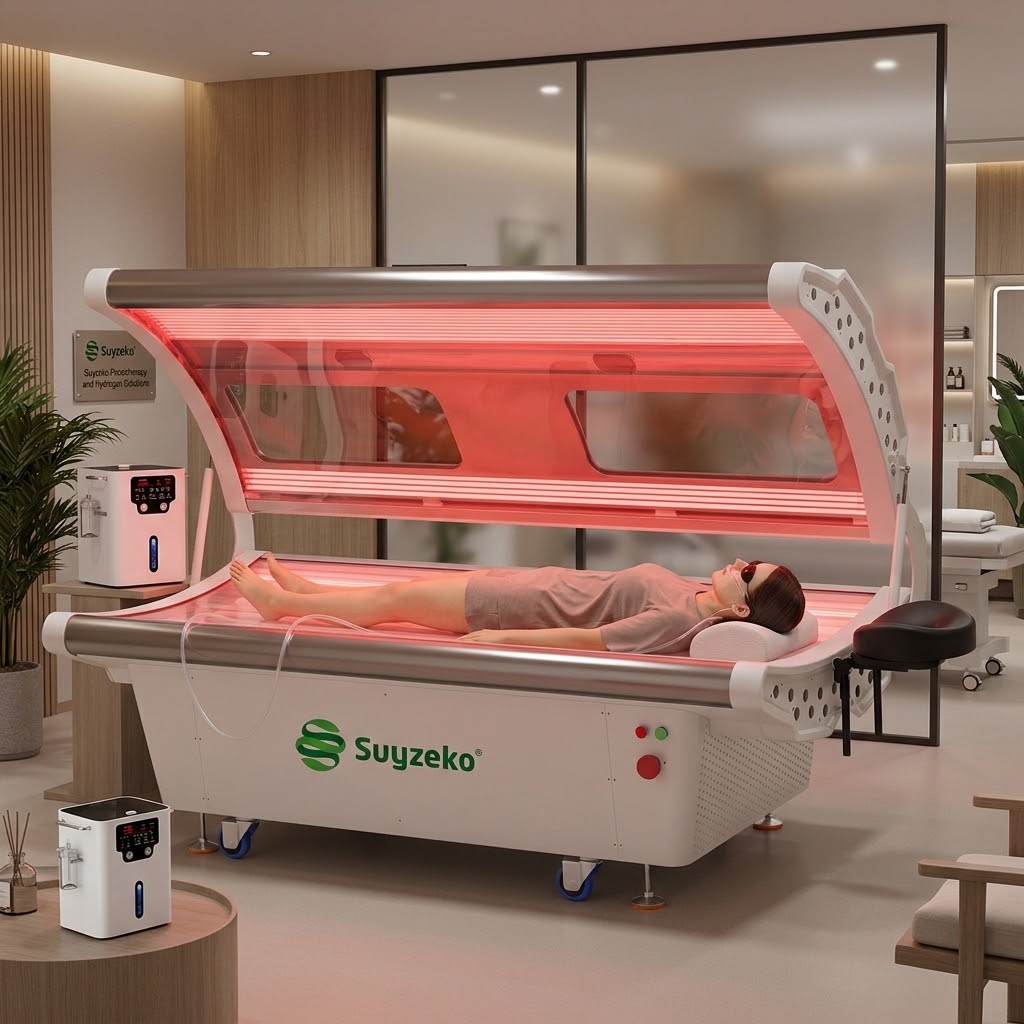
·Whole-body and localized light therapy:Utilizing a scientifically curated combination of wavelengths (such as 630nm, 660nm, 850nm, and 940nm)—can effectively improve blood circulation and alleviate muscle fatigue. For instance, our 【FDA 510(k)-cleared Suyzeko Red Light Therapy Bed】 provides 360° deep-tissue intervention and is widely used in high-end spas and rehabilitation clinics.
·Precision Phototherapy for the Brain:For the nervous system and brain health, specialized helmets utilizing specific wavelengths can penetrate the cranium. You may wish to explore our [Suyzeko 21-Zone Brain Photobiomodulation Helmet], which features 21 independently adjustable channels, enabling precise, targeted photobiomodulation of key brain regions.
4. 1+1 > 2: Why Is the Combination of "Hydrogen + Phototherapy" a Perfect Pairing for Longevity Protocols?
In contemporary high-end anti-aging centers and biohacking practices, the integration of molecular hydrogen inhalation and photobiomodulation (PBM) is demonstrating a powerful synergistic effect.
1.Energy Activation Coupled with Burden Reduction: Phototherapy (PBM) stimulates mitochondria to accelerate their activity and produce more ATP, while molecular hydrogen inhalation simultaneously scavenges excess free radicals generated during metabolic processes. In short, "phototherapy provides efficient energy supply, while hydrogen clears away oxidative stress."
2.Systemic Anti-Inflammation and Targeted Repair: Molecular hydrogen modulates the body’s internal environment, while red and near-infrared light act directly on damaged tissues—achieving comprehensive coverage that spans from "systemic immune modulation" to "localized cellular repair."
3.Holistic Configurations in Longevity Clinics: High-end wellness centers often combine high-flow hydrogen generators with[ full-body red light therapy panels ]or phototherapy beds, creating an all-encompassing "biohacking longevity matrix."
5. Conclusion: Toward an Evidence-Based Future for Longevity.
The advancement of molecular hydrogen technology and photobiomodulation signals a shift in the health industry toward a more rigorous, evidence-based scientific era. By integrating high-standard hydrogen equipment with multi-wavelength phototherapy hardware, professional institutions can offer clients a safe, reliable, and future-oriented longevity intervention experience.
 Navigating the Longevity Economy: The Role of 21-Channel PBM in Brain Health