



 Home
HomeGeneric vs. Targeted Therapy: Why the 21-Zone tPBM Helmet is the Perfect Match for QEEG (10-20 System)?
 Suyzeko
 Aug 11,2026

Generic vs. Targeted Therapy: Why the 21-Zone tPBM Helmet is the Perfect Match for QEEG (10-20 System)?
Key Takeaways
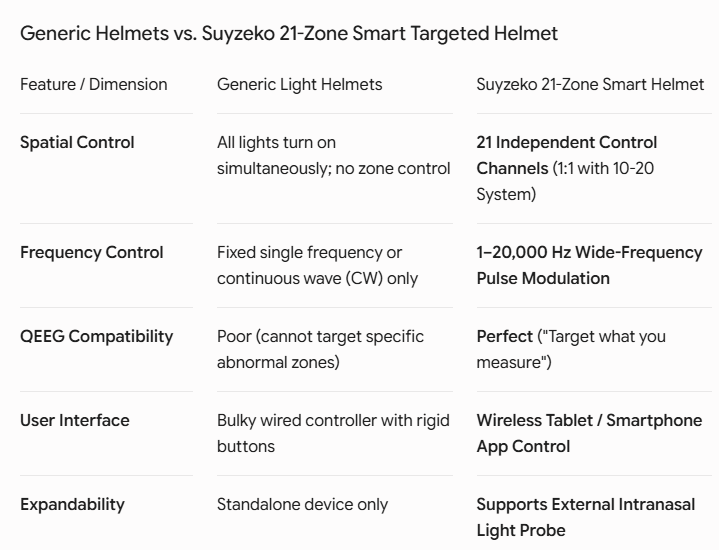
·The Gap in Care: Traditional light therapy helmets illuminate the entire head at once, making it impossible to deliver localized intervention for specific brain regions identified as abnormal by QEEG (e.g., isolated frontal or occipital dysfunction).
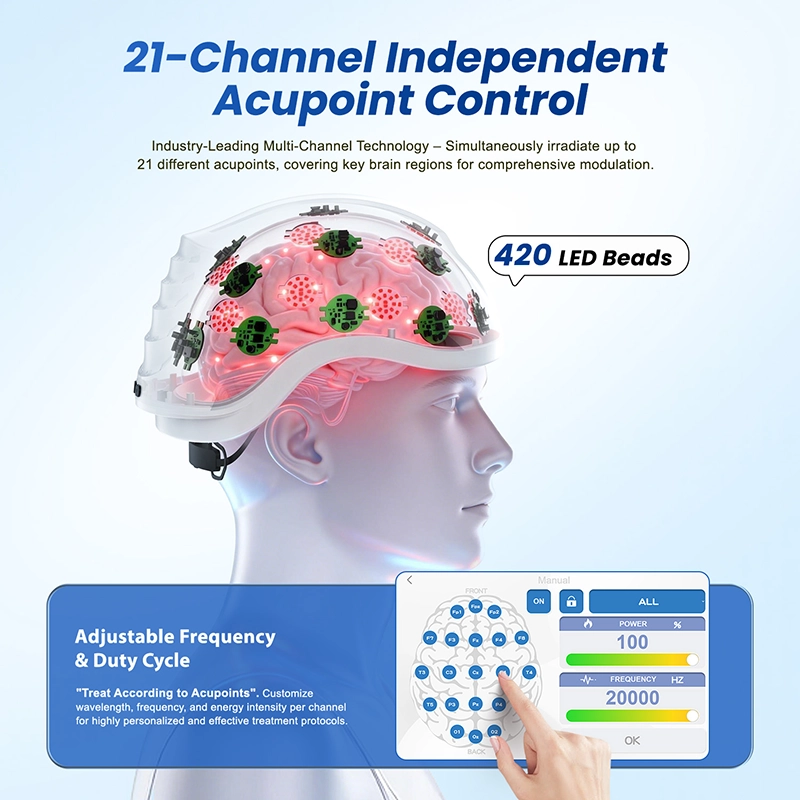
·10-20 System Alignment: The 21-zone smart helmet features 420 medical-grade LEDs divided into 21 independently controlled channels that directly map to the International 10-20 EEG system coordinates.
·1–20,000 Hz Wide-Frequency Modulation: Clinicians can independently adjust pulse frequency and intensity for each zone, meeting the strict requirements of neurofeedback therapists for brainwave entrainment (Alpha, Gamma, etc.).
Proven Clinical ROI & Retention: Establishes an objective protocol: QEEG Assessment -Targeted tPBM Intervention-QEEG Retest Verification, boosting clinic credibility and patient retention.
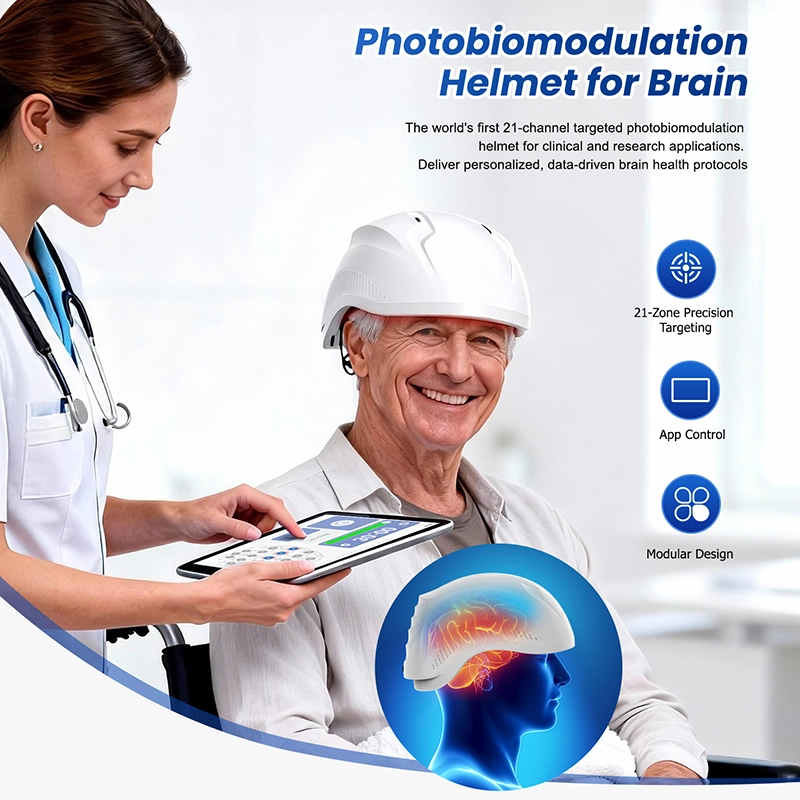
1. Why Has QEEG Brain Mapping Transformed Modern Brain Care?
For decades, cognitive wellness and neuro-rehabilitation heavily relied on subjective questionnaires or trial-and-error physical interventions. However, different regions of the brain perform vastly distinct neurological functions. A "one-size-fits-all" approach often yields inconsistent results.
The advent of Quantitative EEG (QEEG) Brain Mapping has revolutionized this landscape. By applying mathematical Fourier transforms to raw EEG signals and comparing them against normative databases, QEEG transforms brain activity into intuitive, color-coded Brain Maps.
The Brain’s GPS Coordinates: The International 10-20 System
To standardize electrode placement across different scalp structures, the medical community established the International 10-20 EEG System:
Frontal Lobes (Fp1, Fp2, Fz): Manage executive function, decision-making, focus, and emotional regulation.
Central Region (C3, C4, Cz): Oversee sensorimotor cortex and motor control.
Parietal Lobes (P3, P4, Pz): Responsible for spatial awareness and sensory integration.
Occipital Lobes (O1, O2, Oz): The primary visual processing and relaxation center.
Temporal Lobes (T3, T4, T5, T6): Process memory, language, and emotional responses.
2. Cellular-Level Energy Activation: How Does Near-Infrared Light (tPBM) Actually Work?
Before exploring targeted delivery, it is essential to understand the biophysics of Transcranial Photobiomodulation (tPBM).
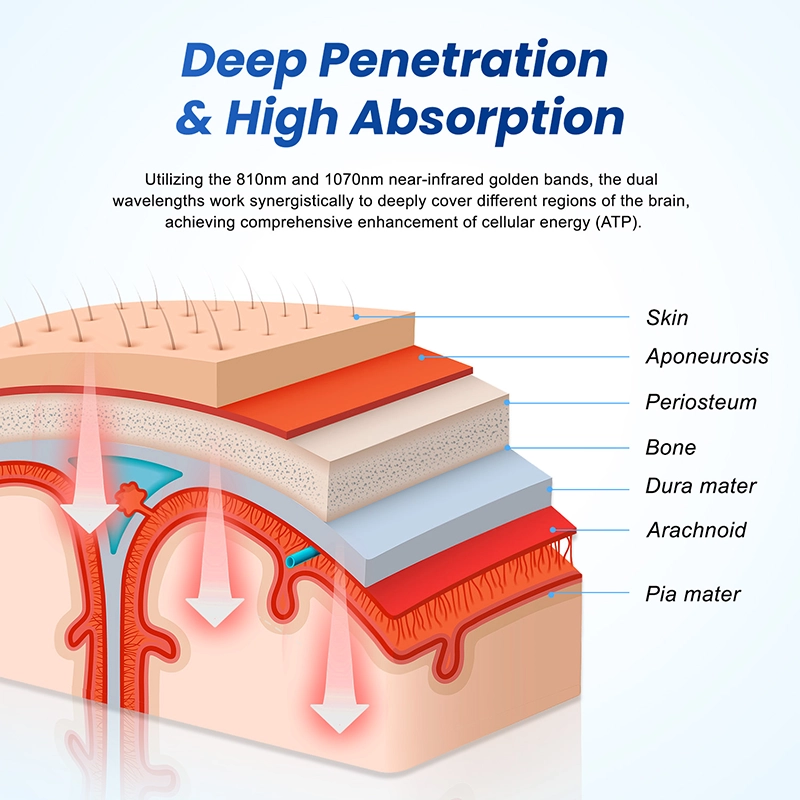
tPBM utilizes near-infrared (NIR) light within the "Biological Optical Window" (800nm–1100nm) to penetrate scalp and skull tissues and interact directly with cortical neurons.
·810nm Near-Infrared Light: Demonstrates exceptional cranial penetration depth, reaching cortical layers up to 15–20mm below the skull.
·1070nm Near-Infrared Light: Features lower absorption coefficients in water and hemoglobin, enabling deeper light energy penetration into subcortical structures.
How Photons Convert Into Cellular Energy for the Brain
·Activating Mitochondrial CCO: Near-infrared photons are absorbed by Cytochrome C Oxidase (CCO), the primary photoreceptor in the mitochondrial respiratory chain.
·Releasing Nitric Oxide & Boosting ATP: Photon absorption prompts the dissociation of Nitric Oxide (NO), restoring oxygen consumption and significantly increasing Adenosine Triphosphate (ATP) production.
·Enhancing Cerebral Blood Flow (CBF): Released NO induces localized vasodilation, elevating regional blood flow and oxygenation.
·Stimulating Neuroplasticity: Upregulates neurotrophic factors (such as BDNF) to encourage synaptogenesis and neural pathway repair.
3.Generic Illumination vs. 21-Zone Targeted Therapy: The Fatal Bottleneck of Traditional Helmets
Despite the proven clinical benefits of tPBM, off-the-shelf light helmets fall short when integrated into QEEG-guided clinical workflows.
The Pain Point of Generic Devices: Lack of Precision
Consider a QEEG report showing a patient with an overactive Frontal Lobe (excessive High-Beta/Gamma) but underactive Occipital Lobe (Alpha deficit):
·Generic Helmet: Illuminates the whole head, subjecting the already overstimulated frontal cortex to unnecessary light energy.
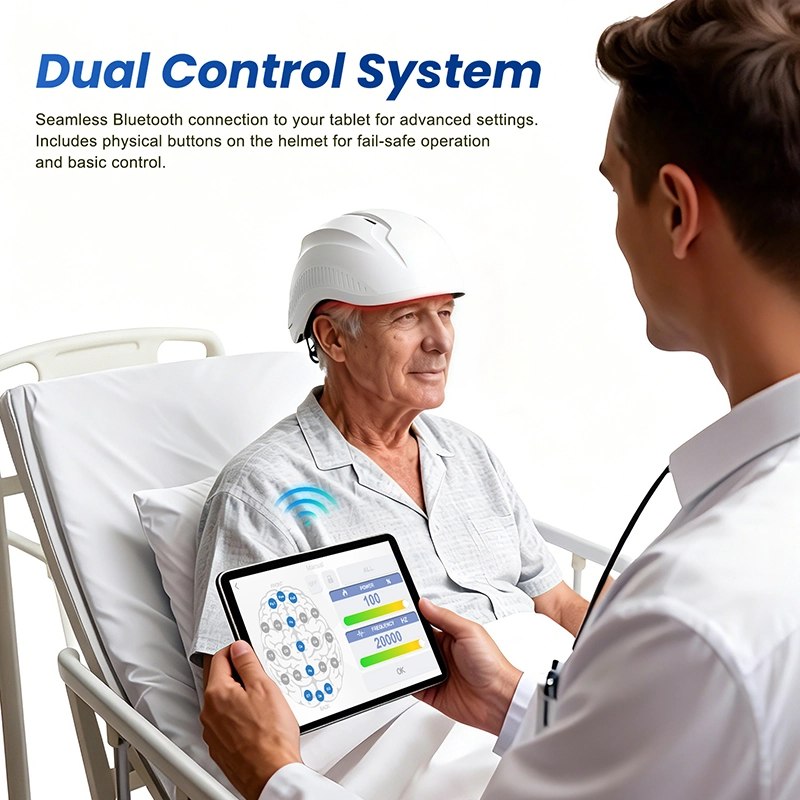
·21-Zone Smart Helmet: The therapist can deactivate the frontal channels on the App while keeping the occipital channels active at a calming 10Hz Alpha pulse frequency.
4.Global Compliance & Deep OEM / ODM Customization
Backed by 13 years of manufacturing expertise, Suyzeko provides global B2B partners, distributors, and clinics with reliable product quality and flexible customization options.
Global Compliance & Easy Clearance
ISO 13485: Certified Quality Management System for Medical Devices.
CE, FCC, RoHS: Full compliance with European and North American market standards.
UL, PSE: Certified power supplies and electrical safety for seamless international customs clearance.
Rapid OEM / ODM Capabilities
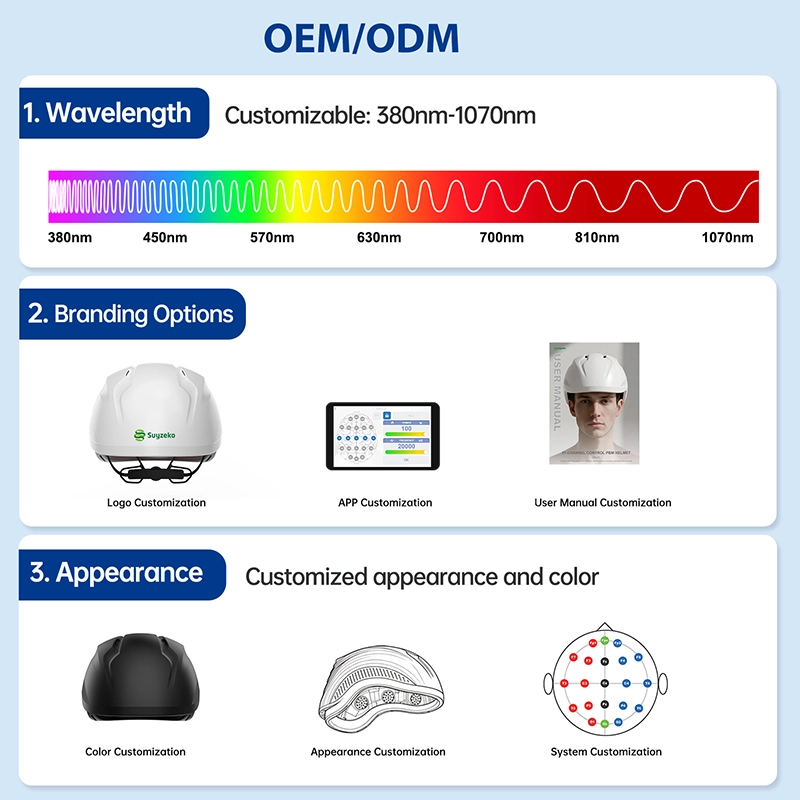
·Wavelength Customization: Full-spectrum customization from 380nm to 1070nm (including combinations of 630nm, 810nm, 1070nm, etc.).
·Branding and Software: Custom shell logo printing, personalized App UI branding, custom user manuals, and packaging.
·Turnaround Speed: 3–5 days for design renders - 7–10 days for 3D functional prototypes -15–20 days for batch production sample delivery.
Conclusion: Entering a New Era of Targeted Brain Health
The future of brain care lies in precision physical interventions. Combining objective QEEG assessments with 21-zone targeted photobiomodulation gives practitioners, researchers, and brands an unmatched technical and clinical edge.
Ready to Upgrade Your Clinic or Launch Your Own Brand?
Contact our technical and sales engineering team today to get started:
Request Technical Specification Sheets & QEEG Clinical Application Guides
Apply for Clinical & Research Sample Discounts
Discuss OEM / ODM Private Label Partnerships
Company: Shenzhen Suyzeko Limited.
Contact: Lily | Sales Manager
Phone / WhatsApp: +86 17724647782
Email: sale02@sschgroup.com
 Shenzhen Suyzeko Demonstrates 3-Year Continuous Reliability of Hydrogen Inhalation Machine in Japanese Market